RUDI SECKEL
Lawyer I Specialist lawyer for administrative law I Diploma in public administration
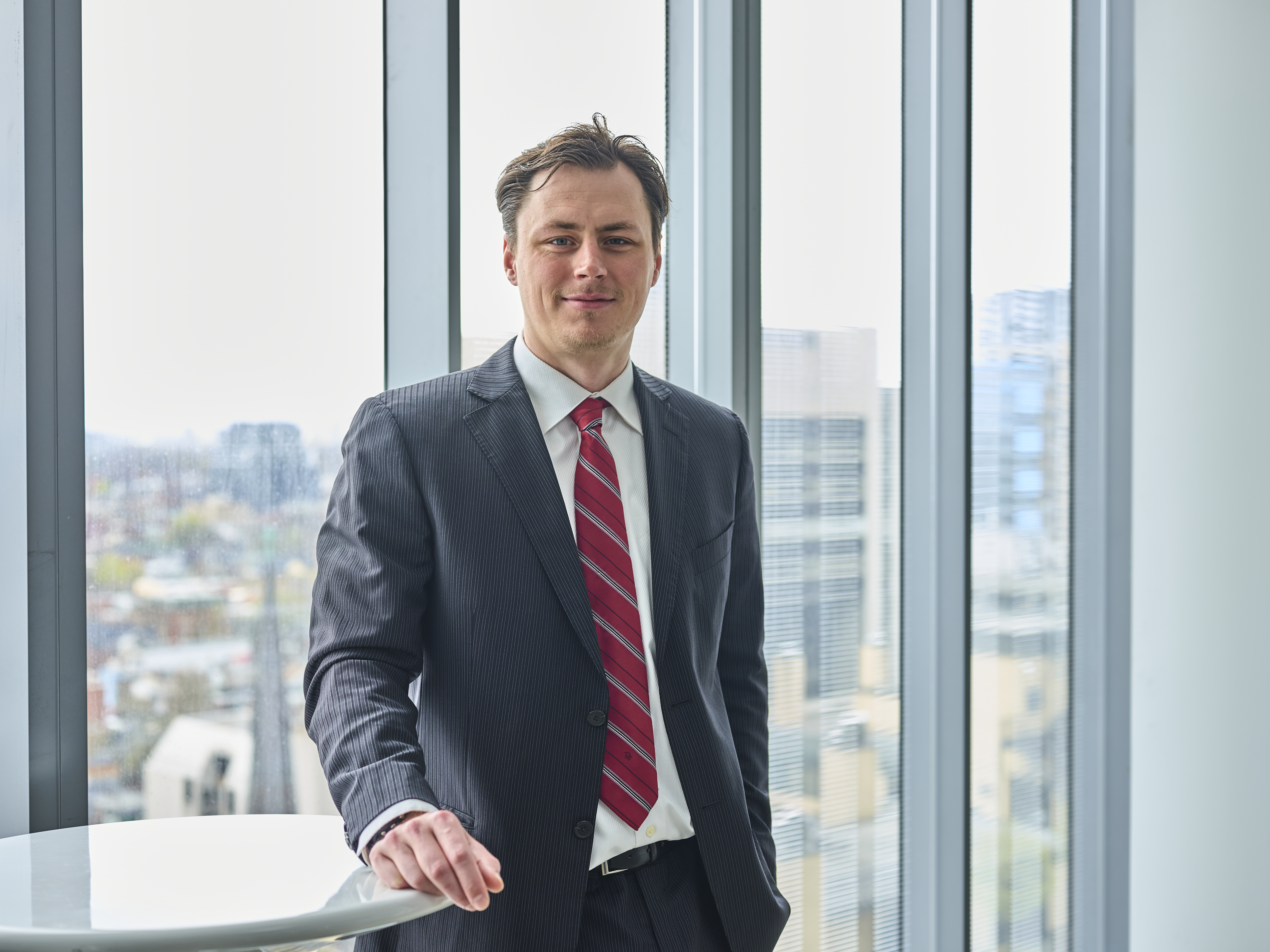
The legal assessment is apparent on the face of the facts!
My professional career began with a three-year dual study program in public administration in the German state of Thuringia, leading to a degree as Diplom-Verwaltungswirt. During this time, I gained practical experience working with various public authorities. I subsequently completed my legal education in Jena and Dresden, while working alongside my studies in law and during my legal traineeship (Referendariat) with law firms specializing in public law.
At the end of 2019, I started practicing as an associate lawyer with a well-regarded law firm in Dresden, where I primarily advised on matters of public law until early February 2024. Since March 2024, I have been part of the team at the German-Canadian Chamber of Industry and Commerce, where I support German companies in entering the Canadian market.
With this diverse professional background, I am well equipped to address your legal questions and to support you effectively in your legal matters. My goal is to provide practical, solution-oriented advice and to represent your interests in the best possible way.
I advise both public-sector and private clients on German construction planning and building regulatory law, heritage protection law, environmental law, water law, public funding and grant law, BAföG (student financial aid) law, as well as on other areas of public law.
Public Building Law
Public building law is a field of law that deals with the rules and regulations governing the construction of buildings and other structures. It encompasses laws, regulations, and guidelines set by governmental bodies that regulate the process of construction.
In public building law, the focus is on ensuring that construction projects align with the interests of the public. This means that construction projects must adhere to certain regulations and standards to ensure they are safe, environmentally friendly, and urbanistically sound.
Typical topics in public building law include the planning of construction projects, building permits, building regulations, monument protection, environmental protection, and land use. It also regulates the relationship between developers, construction companies, and government authorities throughout the construction process.
In essence, public building law serves to ensure that construction projects are in the public interest and consider the needs of the community while respecting the rights of developers.
Subsidy Law
Subsidy law refers to the legal provisions and regulations governing the allocation and use of financial support or subsidies by government authorities. These subsidies may include grants, loans, tax incentives, or other financial assistance provided by governments, agencies, international organizations, or foundations.
Typical topics in subsidy law include procurement procedures, eligibility criteria for subsidies, financing regulations, monitoring and control of fund utilization, as well as legal consequences for violations of subsidy guidelines.
Overall, subsidy law aims to ensure that subsidies are effectively and transparently allocated to achieve specific objectives, whether it be promoting innovation, economic development, environmental protection, or other societal goals.
BAföG Law
The BAföG law pertains to the Federal Training Assistance Act (Bundesausbildungsförderungsgesetz or BAföG), a law in Germany that provides financial assistance to students and trainees to finance their education. BAföG is granted to students in need to enable them to pursue their education even if they do not have sufficient financial resources. The support may consist of grants and low-interest loans and is determined by various factors such as the income of the student’s parents or spouse. The goal of BAföG is to promote equal opportunities in the education system regardless of the financial situation of the students.
Publications
In 2023 and 2024, I was a regular contributor to the construction law section of NJW-Spezial, where I authored case notes and articles focusing on private and, in particular, public construction and planning law. Below you will find a chronological list of my published articles:
„Intermediate Storage of Construction Waste – A Guide,“ NJW-Spezial 2024, 44
„Cannabis Law – Is There a Need for Urban Planning Regulation?“ NJW-Spezial 2023, 620
„Tectural Approval – Must One Build What Was Approved?“ NJW-Spezial 2023, 44
„Consequences of the Emergency Energy Measures Package for Construction Law,“ NJW-Spezial 2022, 684
„Discovery of Unexploded Ordnance During Construction Work: Who Bears the Removal Costs?“ NJW-Spezial 2022, 428
„Liability of Monument Conservation Authorities for Construction Cost Increases,“ NJW-Spezial 2022, 44
„Open Spaces and Urban Development Context,“ NJW-Spezial 2021, 108
„Questions of Monument Protection Law in the Building Permit Procedure,“ NJW-Spezial 2020, 428
Contact
- hello@rechtsanwalt-seckel.de
- + 49 (0) 15679 029550
- If I am not available by phone, please kindly send me an email. I will get back to you promptly.
LEGAL NOTICE
This website is operated by Rudi Seckel, Attorney at Law (Rechtsanwalt). I am exempt from the statutory office requirement pursuant to section 29a (2) of the German Federal Lawyers’ Act (BRAO).
Phone: +49 (0) 156 79 029550
Email: hello@rechtsanwalt-seckel.de
I am a member of the Saxony Bar Association (Rechtsanwaltskammer Sachsen), Glacisstraße 6, 01099 Dresden, Germany. The Saxony Bar Association can be contacted as follows:
Phone: +49 (0) 351 31859-0
Fax: +49 (0) 351 33608-99
Website: www.rak-sachsen.de
The Saxony Bar Association is the competent supervisory authority for attorneys admitted in Saxony. I was admitted to the bar and granted the professional title “Rechtsanwalt” in the Federal Republic of Germany.
The applicable professional regulations include, in particular, the German Federal Lawyers’ Act (BRAO), the Code of Professional Practice for Lawyers (BORA), the Specialist Lawyers’ Regulations (FAO), the German Lawyers’ Remuneration Act (RVG), the Act on the Activities of European Lawyers in Germany (EuRAG), and the Code of Conduct for European Lawyers (CCBE Code of Conduct). These regulations are available on the website of the German Federal Bar (Bundesrechtsanwaltskammer) at www.brak.de under “For Lawyers” and “Professional Law”.
Professional liability insurance is provided by Markel Insurance SE, Sophienstraße 26, 80333 Munich, Germany. The territorial scope of coverage is limited to the Federal Republic of Germany.
Online Dispute Resolution and Consumer Dispute Resolution
The European Commission provides an online dispute resolution platform, available at http://ec.europa.eu/consumers/odr/. I do not participate in dispute resolution proceedings before a consumer arbitration board.